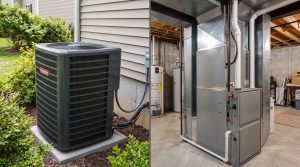
 If you’re planning for a furnace installation, it’s worth looking beyond a like-for-like replacement. Heat pumps are taking a larger share of the heating equipment market—and could offer another option for your home.
Heat pumps accounted for 58% of U.S. space-heating equipment shipments in the first half of 2026, according to the Building Decarbonization Coalition—even after the federal heat pump tax credit expired at the end of 2025. They also outshipped gas furnaces for four consecutive years, from 2022 through 2025.
Those numbers show that heat pumps have become a mainstream heating choice, maintaining a leading share of equipment shipments even without that federal incentive. But market trends alone don’t determine what belongs in your home. For Raleigh homeowners, the decision comes down to comfort, existing equipment, energy costs, and installation needs.
Why Consider a Heat Pump?
A heat pump provides both heating and air conditioning, making it worth considering when you’re evaluating your home’s overall comfort system. Instead of creating heat through combustion, it transfers heat indoors during winter and moves heat outside during summer.
Heat pump technology has also come a long way. Modern systems can heat effectively at lower outdoor temperatures than older models, while variable-speed equipment adjusts its output as your home’s heating and cooling needs change.
A properly selected standard heat pump can handle typical Raleigh winters. Cold-climate models offer additional heating performance during colder weather, but that extra capability isn’t necessary for every home. A contractor can help determine which type fits your heating needs.
For those considering furnace installation, a dual-fuel system offers another option. It pairs a heat pump with a gas furnace, switching between them based on outdoor conditions and system settings.
What Should Guide Your Decision?
Before choosing a heat pump or scheduling furnace installation, consider these five factors:
- Your home’s existing setup: Converting to a heat pump may be straightforward, or it may require changes to your indoor equipment, ductwork, electrical system, or available space. Our technicians can assess the required changes and help you determine whether a conversion is a worthwhile investment. Your AC’s condition matters, too: if it still has useful life left, replacing only the furnace may make more sense.
- Energy efficiency and operating costs: Heat pumps transfer heat rather than generate it, so they can use less energy to provide the same amount of warmth. That efficiency can help reduce heating costs, but savings compared with a gas furnace depend on local electricity and gas rates, outdoor temperatures, and system performance.
- Upfront cost and overall value: A heat pump may cost more than furnace installation alone. However, if both your furnace and AC need replacement, compare the heat pump’s cost with replacing both systems for a more meaningful picture of the investment.
- Comfort preferences: Furnaces typically deliver hotter air at the vents, while heat pumps provide gentler warmth over longer cycles. Both can keep your home comfortable, but homeowners accustomed to gas heat may notice a difference in how the air feels.
- Long-term plans: Think about whether you expect to stay in your home for several years or move sooner. Your timeline can help frame how you weigh upfront cost against potential long-term value.
Choosing the Right System
There isn’t one heating system that’s right for every home. A furnace, heat pump, or dual-fuel system may be the best fit depending on your existing equipment, installation requirements, budget, and comfort preferences.
Considering a heat pump upgrade or furnace installation in Raleigh, Wake Forest, or surrounding areas? Contact us to have your existing system evaluated and discuss your options. We can help you understand installation requirements, operating costs, and long-term value before you make a decision.